Introduction
Iraq continues to be one of the most important import markets in the Middle East, creating significant opportunities for manufacturers, exporters, traders, and distributors worldwide. However, businesses shipping products to Iraq must comply with specific regulatory requirements before their goods can enter the Iraqi market.
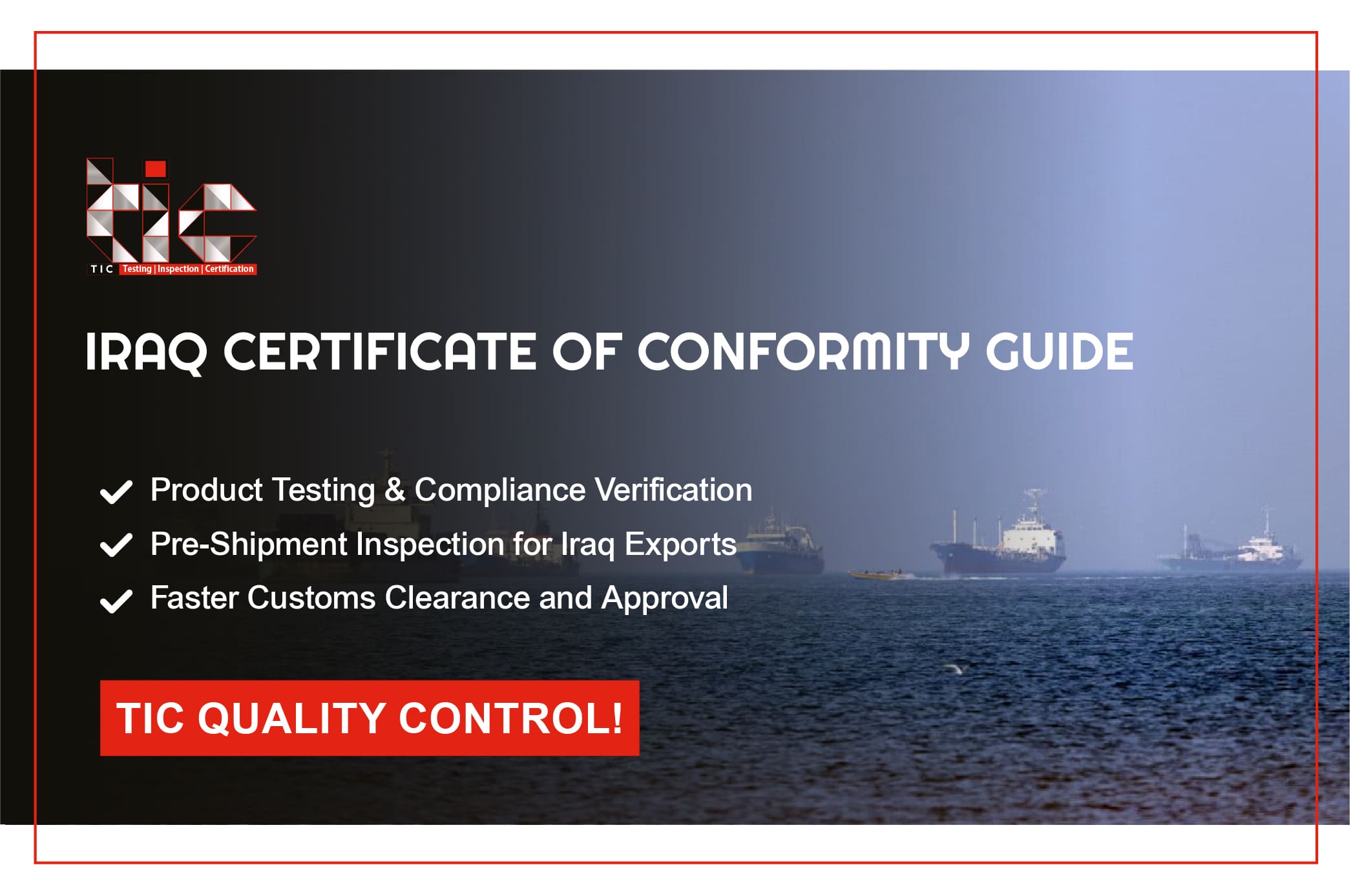
One of the most important requirements is obtaining an Iraq Certificate of Conformity (CoC). The Iraq CoC program helps ensure that imported products meet applicable Iraqi standards, safety regulations, and quality requirements before reaching consumers.
Understanding the Iraq Certificate of Conformity process can help businesses avoid shipment delays, customs clearance issues, financial penalties, and rejected consignments.
This guide explains everything exporters need to know about Iraq CoC certification, the Verification of Conformity (VoC) process, required documents, product categories, inspection requirements, and best practices for successful exports to Iraq.
What Is an Iraq Certificate of Conformity (CoC)?
The Iraq Certificate of Conformity (CoC) is an official document issued after a product has successfully completed conformity assessment procedures required for export to Iraq guide.
The certificate confirms that products comply with relevant Iraqi technical regulations, standards, and safety requirements.
The Iraq CoC program is designed to:
- Protect consumers from unsafe products
- Ensure product quality and reliability
- Prevent counterfeit and substandard goods
- Facilitate smoother customs clearance
- Support fair trade practices
Without the required Certificate of Conformity, shipments may face delays, additional inspections, penalties, or rejection at Iraqi ports of entry.
Why Is Iraq CoC Certification Important?
The Iraqi government has implemented conformity assessment procedures to improve product safety and quality across multiple industries.
Obtaining an Iraq CoC offers several advantages:
Faster Customs Clearance
Products accompanied by a valid Certificate of Conformity typically experience fewer customs-related complications.
Reduced Risk of Shipment Rejection
Certification demonstrates compliance before products arrive in Iraq, minimizing costly delays and rejected consignments.
Increased Buyer Confidence
Importers and distributors prefer working with suppliers that understand and comply with Iraqi regulations.
Market Access
Many regulated product categories require conformity verification before entering the Iraqi market.
Understanding the Iraq Verification of Conformity (VoC) Program
The Iraq Verification of Conformity (VoC) Program is a conformity assessment framework designed to verify that imported products meet applicable requirements before shipment.
The VoC process generally includes:
- Documentation review
- Product assessment
- Laboratory testing (where required)
- Pre-shipment inspection
- Certificate issuance
The program helps ensure that imported products meet quality, safety, and performance expectations.
Products That May Require Iraq CoC Certification
Numerous product categories may fall within conformity assessment requirements.
Common examples include:
Electrical Products
- Switches
- Cables
- Lighting products
- Circuit breakers
- Electrical accessories
Electronics
- Mobile devices
- Consumer electronics
- Computers
- Audio equipment
- Home entertainment systems
Household Appliances
- Refrigerators
- Washing machines
- Air conditioners
- Ovens
- Microwave ovens
Construction Materials
- Cement products
- Steel materials
- Pipes
- Tiles
- Building components
Automotive Products
- Vehicle parts
- Tires
- Batteries
- Automotive accessories
Consumer Goods
- Toys
- Household items
- Personal care products
- Certain textile products
Product requirements may vary depending on classification and applicable regulations.
Step-by-Step Iraq CoC Certification Process
Step 1: Submit an Application
The exporter or importer initiates the conformity assessment process by submitting relevant documentation.
Step 2: Documentation Review
Certification specialists review technical documents, invoices, product specifications, and supporting evidence.
Step 3: Product Testing
Where necessary, products may undergo testing to verify compliance with relevant standards.
Step 4: Pre-Shipment Inspection
Inspectors may verify product quantity, labeling, packaging, and overall shipment conformity before export.
Step 5: Certificate Issuance
Once requirements are satisfied, the Certificate of Conformity is issued.
Step 6: Customs Clearance in Iraq
The CoC supports customs clearance procedures upon arrival in Iraq.
Documents Required for Iraq CoC Certification
Typical documentation may include:
- Commercial Invoice
- Packing List
- Product Specifications
- Test Reports
- Technical Data Sheets
- Product Photographs
- Certificate Application Forms
- Shipping Documents
Providing complete and accurate documentation can significantly reduce processing times.
Common Challenges Faced by Exporters
Many exporters encounter avoidable compliance issues.
Incomplete Documentation
Missing or inaccurate documents often cause delays.
Incorrect Product Classification
Using incorrect product descriptions or classifications can create certification complications.
Missing Test Reports
Some product categories require accredited testing reports before approval.
Labeling Non-Compliance
Improper labeling can trigger inspection concerns and shipment delays.
Late Certification Requests
Beginning the certification process too close to shipment dates can create scheduling issues.
How Long Does Iraq CoC Certification Take?
Processing times vary depending on:
- Product category
- Documentation quality
- Testing requirements
- Inspection scheduling
- Shipment complexity
Companies should begin the process well before planned shipping dates to avoid disruptions.
Best Practices for Exporting to Iraq
Businesses can improve compliance success by:
- Maintaining updated technical documentation
- Using accredited laboratories
- Preparing inspection requirements early
- Verifying product classifications
- Working with experienced conformity assessment professionals
- Keeping regulatory information current
A proactive approach reduces risk and accelerates market entry.
Benefits of Professional Iraq CoC Support
Working with an experienced certification partner can help businesses:
- Reduce certification delays
- Improve document accuracy
- Navigate regulatory requirements
- Coordinate inspections efficiently
- Accelerate certificate issuance
- Support successful customs clearance
Professional guidance becomes particularly valuable for first-time exporters and complex product categories.
Frequently Asked Questions
Many regulated product categories require conformity verification before importation into Iraq.
The Verification of Conformity process is the assessment procedure, while the Certificate of Conformity is the final document issued after successful verification.
Depending on the product category, shipments without required certification may face customs complications or rejection.
Inspection requirements depend on product type, certification route, and applicable regulations.
Early preparation, complete documentation, and professional support help streamline the certification process.
Conclusion
The Iraq Certificate of Conformity (CoC) plays a critical role in ensuring that imported products meet Iraqi quality and safety requirements. Businesses that understand the certification process can reduce delays, improve compliance, and achieve smoother customs clearance.
As Iraq continues to expand its import market, exporters who prioritize regulatory compliance gain a competitive advantage and build stronger relationships with importers, distributors, and government authorities.
Companies planning to export products to Iraq should begin the conformity assessment process early and ensure all documentation, testing, and inspection requirements are addressed before shipment.