
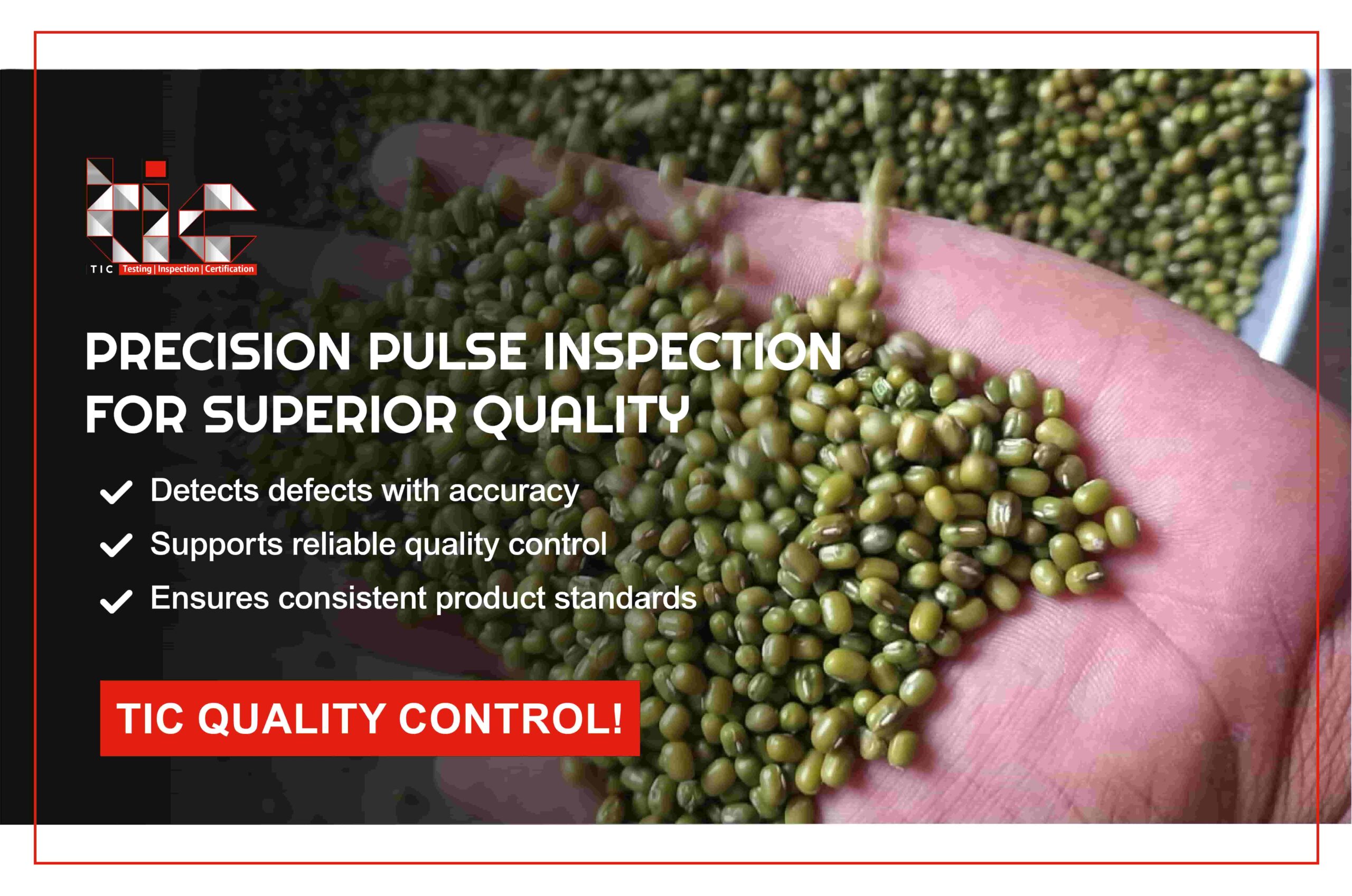
Why Mung Bean Inspection Matters in the Pulse Industry
Moong dal is one of the most widely consumed pulses in India and international markets. As consumer expectations and food safety regulations continue to evolve, maintaining consistent quality has become essential for processors, exporters, and food manufacturers. This is where Mung Bean inspection plays a critical role.
A thorough inspection process helps identify defects, foreign materials, damaged grains, discoloration, and other quality concerns before products reach the market. By implementing professional pulse quality inspection services, businesses can improve product consistency, strengthen brand reputation, and meet buyer specifications with confidence.
Common Quality Issues Found During Moong Dal Inspection
The quality of moong dal can be affected by several factors during harvesting, transportation, storage, and processing. Effective inspection helps detect issues that may impact product quality and customer satisfaction.
Some common inspection findings include:
- Foreign matter contamination
- Broken or damaged grains
- Discolored kernels
- Immature grains
- Insect-damaged pulses
- Moisture-related quality concerns
- Size and color inconsistencies
Identifying these defects early helps processors take corrective action and maintain high-quality standards throughout the supply chain.
The Importance of Pulse Quality Inspection
Professional pulse quality inspection is not limited to visual examination. It involves a systematic assessment of various quality parameters to ensure compliance with customer requirements and industry standards.
Key benefits of pulse inspection include:
Improved Product Consistency
Uniformity in size, color, and appearance is essential for customer satisfaction. Inspection helps maintain consistency across batches and production runs.
Reduced Product Rejections
Exporters and food manufacturers often face strict quality requirements. Comprehensive inspection minimizes the risk of shipment rejection and customer complaints.
Enhanced Food Safety
Detecting contaminants and foreign materials helps ensure safer food products while supporting regulatory compliance.
Better Brand Reputation
High-quality products build customer trust and encourage long-term business relationships.
Key Parameters Evaluated During Moong Dal Quality Inspection
Professional inspectors assess multiple quality factors during the inspection process.
Physical Appearance
Visual evaluation helps identify discoloration, damaged grains, and overall product condition.
Purity Assessment
Inspectors examine the presence of foreign materials such as stones, dust, husk particles, and other contaminants.
Defect Analysis
Broken grains, insect damage, shriveled kernels, and other defects are carefully evaluated to determine quality levels.
Moisture Evaluation
Maintaining appropriate moisture content is essential for product stability, shelf life, and storage performance.
Grading Verification
Inspection ensures that the product meets the agreed grading specifications and buyer requirements.
How Third-Party Inspection Supports Pulse Exporters
For pulse exporters, independent inspection services provide an additional layer of confidence and transparency. Buyers often require verification from trusted inspection companies before accepting shipments.
Third-party inspection offers:
- Objective quality assessment
- Detailed inspection reports
- Verification of product specifications
- Increased buyer confidence
- Reduced trade disputes
By utilizing professional inspection services, exporters can demonstrate their commitment to quality and compliance.
The Role of Technology in Modern Pulse Inspection
Advancements in inspection technology have significantly improved quality control processes within the pulse industry.
Modern inspection methods may include:
- High-resolution visual analysis
- Sample-based quality evaluation
- Digital reporting systems
- Data-driven quality monitoring
- Process verification procedures
These technologies help improve inspection accuracy while supporting efficient quality management practices.
Why Choose TIC Quality Control for Pulse Inspection Services
At TIC Quality Control, we understand the importance of reliable and accurate pulse inspection. Our experienced inspection professionals follow systematic quality assessment procedures designed to support processors, exporters, importers, and food businesses.
Our pulse inspection services focus on:
- Comprehensive quality evaluation
- Detailed defect identification
- Product specification verification
- Consistent inspection methodology
- Transparent reporting processes
We help businesses maintain product integrity and meet quality expectations across domestic and international markets.
Conclusion
Quality assurance is a critical component of successful pulse processing and export operations. Effective moong dal inspection helps identify defects, improve product consistency, enhance food safety, and support regulatory compliance.
Whether you are a processor, exporter, importer, or food manufacturer, investing in professional pulse quality inspection services can help protect your brand reputation and deliver superior products to customers.
With TIC Quality Control as your inspection partner, you can strengthen quality assurance processes and ensure every batch meets the highest standards of excellence.