Introduction: Why Egypt is a Growing Market for Battery Exporters
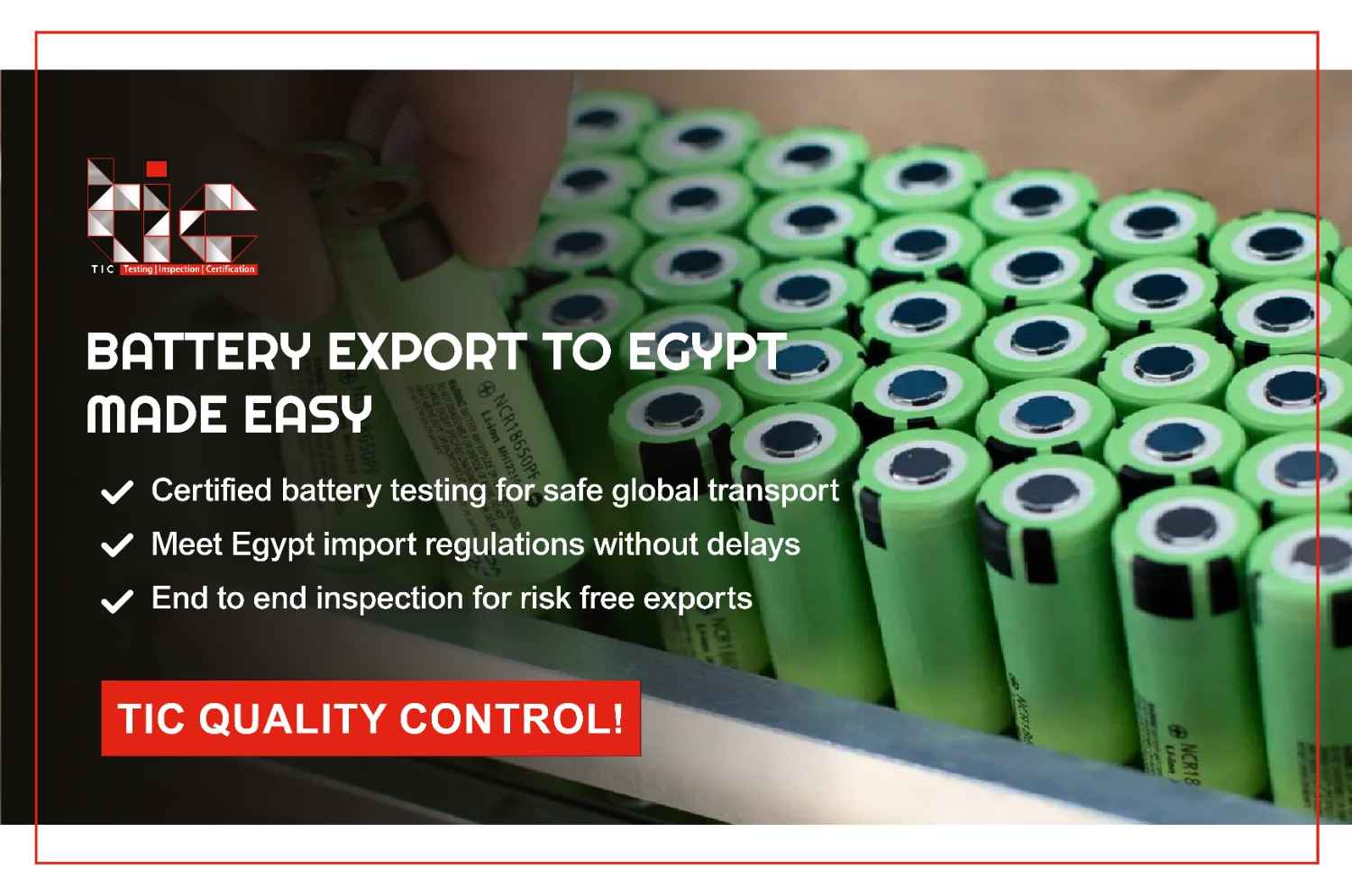
Egypt has become one of the most promising import markets in the Middle East and North Africa for batteries and dry batteries. With rising demand in consumer electronics, automotive sectors, renewable energy projects, and industrial applications, the need for reliable battery imports continues to grow steadily.
For exporters, this creates strong opportunities. But exporting batteries is not like exporting general goods. Batteries, especially lithium and even common dry batteries, are regulated due to safety risks, chemical composition, and transportation hazards.
If you are planning to export batteries to Egypt, understanding compliance requirements, testing standards, and inspection procedures is essential. Missing even a single document or certification can result in shipment delays, rejection, or financial loss.
This is where professional Testing, Inspection and Certification services play a critical role in ensuring smooth and compliant exports.
Understanding Battery Categories in Export Trade
Before getting into regulations, it is important to clearly understand the types of batteries commonly exported to Egypt. Each category has different compliance and safety requirements.
1. Dry Batteries
Dry batteries are widely used in everyday consumer products such as remote controls, flashlights, toys, and small electronic devices.
Common types include:
- Alkaline batteries
- Zinc-carbon batteries
These batteries are considered lower risk compared to lithium batteries, but they still require quality checks and compliance with chemical safety regulations. Poor quality dry batteries can leak, damage products, and harm brand reputation.
2. Lithium Batteries
Lithium batteries are highly popular due to their efficiency and long life. They are used in:
- Mobile phones
- Laptops
- Power banks
- Electric vehicles
However, they are classified as dangerous goods during transportation because they can overheat, catch fire, or explode if not handled properly.
Because of this, lithium batteries require strict testing and certification before export.
3. Lead-Acid Batteries
These are mainly used in:
- Automotive applications
- Industrial backup systems
- Solar energy storage
They are heavier and involve chemical hazards such as acid leakage. Exporting these batteries requires proper handling, packaging, and compliance checks.
Why Compliance is Critical When Exporting to Egypt
Many exporters underestimate the importance of compliance when entering the Egyptian market. In reality, Egypt has strict import control systems to ensure product safety, environmental protection, and consumer safety.
The General Organization for Export and Import Control plays a key role in regulating imported goods, including batteries.
Here is why compliance matters:
1. Avoid Shipment Rejection
If your shipment does not meet Egyptian standards or lacks required documentation, it can be rejected at the port.
2. Ensure Product Safety
Batteries are sensitive products. Faulty batteries can cause fires, leaks, or damage, leading to serious risks.
3. Build Trust with Buyers
Egyptian importers prefer suppliers who follow proper testing and certification processes. It builds long-term business relationships.
4. Meet Environmental Regulations
Certain chemicals like mercury and cadmium are restricted in batteries. Non-compliance can lead to penalties.
Key Standards for Battery Export
Exporters must follow international testing and safety standards to ensure smooth clearance and safe transportation.
One of the most important standards is:
- UN 38.3
This standard is mandatory for lithium batteries and ensures they can safely withstand transport conditions such as vibration, temperature changes, and impact.
Another important standard is:
- IEC 62133
This standard focuses on the safety of rechargeable batteries used in portable devices.
These certifications are not just formalities. They are essential documents that prove your product is safe and compliant for international trade.
Documentation Required for Exporting Batteries to Egypt
Accurate documentation is one of the most common challenges exporters face. Even small errors can delay shipments.
Here are the key documents required:
- Commercial invoice
- Packing list
- Material Safety Data Sheet (MSDS)
- UN38.3 test report and summary
- Product specifications
- Certificate of conformity if required
Additionally, Egypt operates under an advanced cargo system where shipments must be registered before arrival. Exporters must coordinate closely with importers to ensure all documentation is correctly submitted.
The Role of Testing and Inspection Services
This is where your blog starts aligning with your business.
Testing, inspection, and certification services help exporters ensure that their products meet all regulatory and safety requirements before shipment.
For battery exports, these services include:
- Safety testing for performance and durability
- Verification of chemical composition
- Packaging and labeling checks
- Pre-shipment inspection
Without proper inspection, exporters risk sending non-compliant products, which can lead to serious consequences.
Working with a reliable TIC service provider ensures that every aspect of the shipment is verified before it leaves the origin country.
Setting the Foundation for Successful Export
Exporting batteries to Egypt is not difficult if done correctly. The key is preparation, compliance, and working with experienced professionals who understand both international standards and Egyptian regulations.
In the next part, we will go deeper into testing procedures, common mistakes exporters make, and how professional TIC services in Egypt can help ensure smooth and successful market entry.
Batteries & Dry Batteries Export to Egypt: Testing, Risks, and How to Ensure Compliance
Battery Testing Procedures Every Exporter Must Understand
When exporting batteries to Egypt, testing is not just a technical requirement. It is a critical step that determines whether your shipment will be accepted or rejected.
Different types of batteries require different testing methods, but the goal is always the same: to ensure safety, reliability, and compliance with international and Egyptian regulations.
1. Performance and Capacity Testing
This test checks whether the battery performs as claimed.
It evaluates:
- Energy capacity
- Discharge rate
- Efficiency over time
For dry batteries, this ensures they deliver consistent power. For lithium batteries, it confirms long-term usability and stability.
2. Thermal and Safety Testing
Temperature is one of the biggest risk factors in batteries.
Thermal testing evaluates how a battery behaves under:
- High temperatures
- Rapid temperature changes
- Overheating conditions
This is especially important for lithium batteries, which can become dangerous if not properly tested.
3. Short Circuit and Overcharge Testing
These tests simulate real-world risks.
They check:
- What happens if the battery is short-circuited
- How it reacts to overcharging
A compliant battery should not explode, leak, or catch fire under these conditions.
4. Leakage Testing for Dry Batteries
Even though dry batteries are considered lower risk, leakage is a common issue.
Leakage testing ensures:
- No chemical escape
- Proper sealing
- Safe usage in consumer products
This is crucial for maintaining product quality and avoiding customer complaints.
5. Transport Simulation Tests
To comply with UN 38.3, batteries must pass transport-related tests such as:
- Vibration testing
- Shock testing
- Altitude simulation
- Impact resistance
These tests ensure the battery can survive shipping conditions without becoming hazardous.
Packaging and Labeling Requirements
Even if your product passes testing, improper packaging can still cause shipment rejection.
Battery exports to Egypt must follow strict packaging and labeling rules, especially for lithium batteries.
Key packaging requirements:
- Strong, durable outer packaging
- Protection against short circuits
- Separation of battery terminals
- Shock-resistant cushioning
Labeling requirements include:
- Battery type identification
- Hazard labels for lithium batteries
- Handling instructions
- Manufacturer details
Incorrect or missing labels are one of the most common reasons shipments get delayed or stopped at customs.
Common Challenges Exporters Face
Many exporters run into problems not because of bad products, but due to lack of awareness or poor preparation.
Here are the most common issues:
1. Missing or Incorrect Test Reports
Failure to provide valid reports like UN38.3 can immediately block shipment clearance.
2. Poor Supplier Quality Control
Some manufacturers do not follow consistent production standards. This leads to:
- Product defects
- Performance failures
- Non-compliance with regulations
3. Errors in Documentation
Even small mistakes in paperwork can cause major delays in Egypt’s import system.
4. Non-Compliance with Chemical Restrictions
Batteries containing restricted levels of hazardous materials may be rejected.
5. Lack of Pre-Shipment Inspection
Skipping inspection to save cost often results in higher losses due to rejected shipments or damaged goods.
Egypt’s Import Control and Cargo System
Egypt has implemented strict digital systems to monitor imports and improve transparency.
Exporters must coordinate with importers to ensure proper registration of shipments before arrival.
Failure to follow this process can result in:
- Shipment delays
- Additional storage costs
- Rejection or return of goods
Understanding and complying with Egypt’s import procedures is just as important as product testing.
How Professional TIC Services Reduce Export Risks
This is where working with an experienced Testing, Inspection, and Certification provider becomes essential.
A professional TIC partner helps exporters manage every stage of the process, including:
Pre-shipment inspection
Ensures the product meets quality and quantity requirements before shipping.
Laboratory testing
Verifies compliance with international standards and safety requirements.
Supplier audits
Checks whether manufacturers follow proper production processes.
Documentation support
Helps ensure all paperwork is complete and accurate.
Why Exporters Choose TIC Services for Battery Shipments
Battery exports involve higher risks compared to many other products. One mistake can lead to serious financial and reputational damage.
Using TIC services helps exporters:
- Minimize risk of rejection
- Ensure compliance with Egyptian regulations
- Improve product quality
- Build trust with importers
- Reduce delays and unexpected costs
For companies exporting to Egypt, having reliable inspection and testing support is no longer optional. It is a strategic necessity.
Moving Toward Smooth and Compliant Exports
Exporting batteries to Egypt requires a combination of technical knowledge, regulatory awareness, and proper execution.
By focusing on testing, packaging, documentation, and inspection, exporters can avoid the most common pitfalls and ensure successful shipments.
In the final part, we will look at how TICQC supports battery exporters with specialized services in Egypt and how you can streamline your export operations with the right partner.
Batteries & Dry Batteries Export to Egypt: Ensuring Success with Reliable TIC Services
The Final Step: Turning Compliance into Successful Market Entry
By now, it is clear that exporting batteries and dry batteries to Egypt is not just about supplying products. It involves strict compliance, detailed testing, proper documentation, and careful coordination with import systems.
Many exporters face challenges not because they lack demand, but because they underestimate the complexity of regulatory requirements. From safety testing to customs clearance, every step must be handled with precision.
This is where having the right Testing, Inspection, and Certification partner makes a measurable difference.
How TICQC Supports Battery Exporters to Egypt
At TICQC, the focus is not only on compliance but also on helping exporters achieve smooth, reliable, and efficient market access in Egypt.
With strong experience in battery inspection and certification, TICQC provides end-to-end support tailored to the needs of exporters dealing with dry batteries, lithium batteries, and industrial battery systems.
1. Pre-Shipment Inspection Services
Before your shipment leaves the origin country, TICQC conducts detailed inspections to verify:
- Product quality and specifications
- Quantity and packaging
- Labeling compliance
- Overall shipment condition
This step helps ensure that your goods meet both buyer expectations and Egyptian import requirements.
2. Battery Testing and Compliance Verification
TICQC supports exporters in meeting international standards such as:
- UN 38.3
- IEC 62133
Testing services include:
- Safety and performance testing
- Thermal and durability checks
- Leakage testing for dry batteries
- Transport safety validation
By ensuring that all required tests are completed accurately, TICQC reduces the risk of shipment rejection or delay.
3. Supplier and Factory Audits
One of the most overlooked risks in battery export is inconsistent manufacturing quality.
TICQC conducts factory audits to evaluate:
- Production processes
- Quality control systems
- Compliance with international standards
This helps exporters identify and eliminate risks at the source before production issues turn into costly problems.
4. Documentation and Compliance Support
Documentation errors are one of the leading causes of shipment delays in Egypt.
TICQC assists with:
- Verification of test reports and certificates
- Review of shipping documents
- Guidance on compliance with Egyptian import requirements
This ensures that your paperwork is complete, accurate, and aligned with regulatory expectations.
5. Support for Smooth Customs Clearance in Egypt
Navigating Egypt’s import system can be complex, especially for first-time exporters.
TICQC helps streamline the process by ensuring that:
- All compliance requirements are met before shipment
- Documentation is properly prepared and verified
- Potential issues are identified early
This reduces the chances of delays, penalties, or rejected shipments.
Why TICQC is the Right Partner for Battery Exporters
Choosing the right TIC partner is a strategic decision that directly impacts your export success.
TIC Quality Control (TICQC) stands out by offering:
- Strong expertise in battery testing and inspection for Egypt & all
- Understanding of Egyptian import regulations
- Fast and reliable service delivery
- End-to-end support from testing to inspection
For exporters, this means fewer risks, smoother operations, and greater confidence in every shipment.
Best Practices for Exporting Batteries to Egypt
To succeed in this market, exporters should follow a few key practices:
- Always complete required testing before shipment
- Ensure proper packaging and labeling
- Verify all documentation carefully
- Work with experienced TIC professionals
- Maintain consistent product quality
These steps not only help in compliance but also improve your reputation with buyers in Egypt.
Conclusion: Power Your Exports with Confidence
The demand for batteries and dry batteries in Egypt continues to grow, offering strong opportunities for global exporters. However, success in this market depends on more than just supply. It requires strict compliance, reliable quality, and efficient execution.
By partnering with a trusted TIC provider TICQC, exporters can navigate regulatory challenges, reduce risks, and ensure smooth entry into the Egyptian market.
Whether you are exporting dry batteries for consumer use or advanced lithium batteries for industrial applications, the right support system makes all the difference.
Ensure your battery shipments meet every requirement with confidence. Partner with TICQC for professional testing, inspection, and certification services tailored for exports to Egypt.