
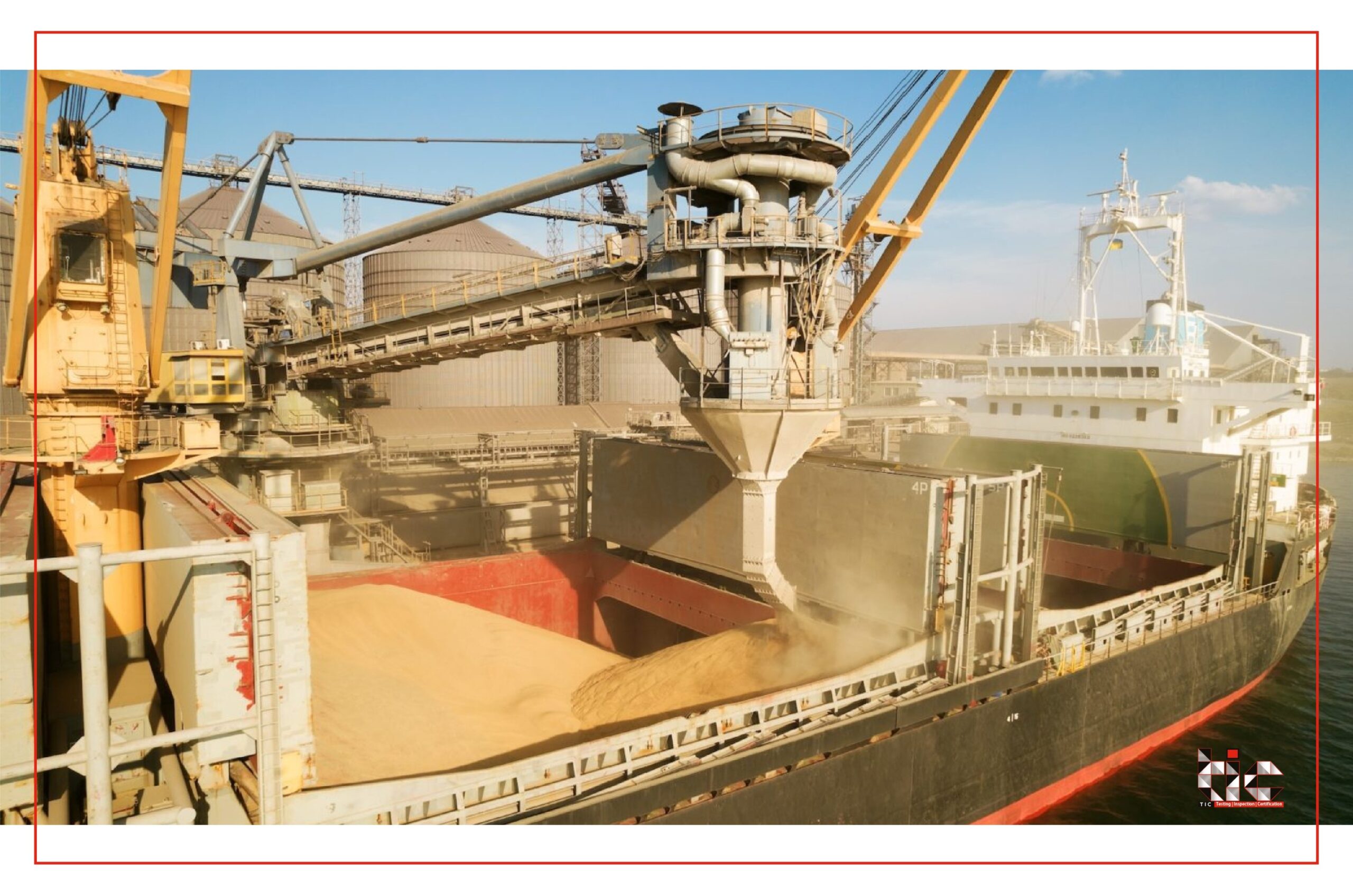
Numbers tell stories. And right now, the numbers coming out of global grain export inspections data are telling a story worth paying close attention to whether you are a grain trader, an importer, a logistics operator, or anyone else with a stake in how agricultural commodities move around the world.
For the week ending March 12, 2026, corn export inspections in the United States totalled 1.65 million metric tons, up from 1.52 million metric tons the previous week. Soybean inspections came in at 966,000 metric tons, rising from 887,000 metric tons a week earlier and meaningfully higher than the 664,000 metric tons recorded during the same week in 2025. Wheat inspections, meanwhile, fell to 343,000 metric tons, down from 498,000 metric tons the prior week.
These weekly figures are more than just statistics. They reflect the actual physical movement of grain from origin facilities, through inspection and toward export and when you zoom out to look at the full marketing year picture, the shifts in direction become even more significant.
The Bigger Picture: What Marketing Year Data Reveals
Weekly inspection figures capture a snapshot, but marketing year totals show the real momentum. As of mid-March 2026, the USDA had inspected 42.86 million metric tons of corn since the start of the marketing year a figure that is tracking meaningfully higher than the same period last year. Sorghum has seen even more dramatic growth, with year-to-date shipments running approximately 61% above last year’s pace.
On the other side of the ledger, soybeans are under pressure. Marketing year-to-date soybean inspections stand at 28.06 million metric tons, lower than the equivalent figure from a year ago. Wheat, despite a softer recent week, is running about 3 million metric tons above last year’s year-to-date total at 19.47 million metric tons inspected.
What does this split picture mean? It reflects a global feed grain market that is in strong demand, corn and sorghum are both key inputs for livestock feed, and their outperformance suggests that animal agriculture around the world is drawing heavily on export supplies. Soybeans, by contrast, are facing a more complex demand environment, with buyers weighing prices, logistics, and the availability of supply from competing origins.
Why Export Inspection Data Matters and What It Actually Measures
Before going further, it is worth explaining what export inspection data actually captures, because it is often misunderstood.
In the United States, the Federal Grain Inspection Service (FGIS) part of the USDA is responsible for official grain inspection and weighing at export facilities. When a shipment of corn, soybeans, sorghum, or wheat is prepared for export, it must be officially inspected and weighed before it can leave the country. This is not optional, and it is not a formality. It is a mandatory, standardised process that certifies the grade, quality, moisture content, weight, and condition of the grain.
The weekly inspection data published by the USDA reflects the volume of grain that has gone through this process at export facilities across the country, primarily at Gulf of Mexico terminals, Pacific Northwest ports, and Great Lakes facilities. The Gulf handles the majority of corn, soybean, and sorghum shipments, while the Pacific Northwest is the dominant channel for grain moving into Asian markets.
Every metric ton counted in those weekly figures represents grain that has been sampled, tested, graded, and certified. It represents documentation that exists. And it represents a standard that both the exporter and the importer are relying on.
The Role of Inspection in Protecting Both Sides of a Grain Trade
In global agricultural commodity trade, grain inspection is not just a regulatory requirement at the point of export, it is a commercial tool that protects both the seller and the buyer.
For exporters, official inspection certification establishes what was shipped. It records the grade, moisture, protein content where applicable, weight, and condition of the cargo at the moment it left the origin facility. If a dispute arises at the destination, if the buyer claims the grain arrived short in weight, below grade, or contaminated, the exporter’s position begins with the inspection certificate issued at origin. Without it, the exporter has no documentary defence.
For importers and end users feed mills, grain processors, food manufacturers, the inspection certificate is the first assurance that what they ordered is what they are receiving. When an importer specifies US No. 2 Yellow Corn with a maximum moisture content of 14% and maximum aflatoxin levels within safe limits, the export inspection certificate is the document confirming those specifications were met when the grain was loaded.
This is not merely theoretical. Grain shipment disputes are a regular feature of international commodity trade, and the most common underlying cause of a dispute is a gap between what was contracted, what was shipped, and what arrived. Inspection done properly, at the right point in the chain, by qualified professionals, is the mechanism that closes those gaps.
Competition Is Growing: What That Means for Inspection Standards
One of the most notable developments in grain export markets right now is the re-emergence of strong competition from other origins. Argentina and Ukraine are both active in the corn export market, offering supply to buyers who might otherwise turn to the United States. Brazil remains a dominant force in soybeans.
This competition is relevant to inspection standards in a practical way. When buyers have multiple origins to choose from, they can be, and increasingly are, selective about documentation quality, not just price. A buyer choosing between US-origin and Argentine-origin corn is not only comparing prices per metric ton. They are comparing the reliability of the supply chain, the quality of the inspection documentation, and their confidence that what was contracted will be what arrives.
Markets where competition is intense tend to raise standards over time, because sellers who cannot provide credible, independent quality documentation lose business to those who can. This is a dynamic that is playing out across global grain markets right now, and it is particularly relevant for buyers and sellers operating in markets where official export inspection is not as standardised as in the United States.
What Grain Buyers in Importing Countries Should Be Checking
For importers receiving grain shipments, whether corn, soybeans, sorghum, or wheat, the export inspection certificate issued at origin is the starting point, but it should not be the only check in the system. There are several key considerations that determine whether a shipment arriving at destination will match what the documentation says.
Transit time and storage conditions matter. Grain that was inspected and certified at a US Gulf terminal in compliance with all specifications can still arrive in poor condition if it was stowed improperly, exposed to moisture during the voyage, or held in a vessel with inadequate ventilation. Export inspection certifies condition at the point of loading, not at the point of arrival.
Aflatoxin and mycotoxin levels can change in transit. This is particularly relevant for corn, which is susceptible to mould growth if temperature and moisture conditions during the voyage are not controlled. A corn shipment that tested within safe aflatoxin limits at origin can breach acceptable levels by the time it arrives at a destination port if transit conditions allowed mould to develop. Destination inspection is the only way to establish what the cargo’s condition is on arrival.
Weight can vary. Grain absorbs and releases moisture during a voyage, meaning the weight at destination may differ from the weight at loading. This is a well-understood feature of bulk grain shipments and is typically accounted for by contract, but the only way to establish the actual delivered weight is to weigh the cargo at discharge.
Grade characteristics can shift. Factors like broken kernels, foreign matter, and heat-damaged grain can increase during a voyage, particularly in poor storage conditions. A shipment that graded as US No. 2 at loading may present differently on arrival.
For these reasons, many sophisticated importers arrange for independent third-party inspection at both origin and destination, giving them a documented record of the cargo’s condition at each end of the journey, and a clear basis for establishing where in the supply chain any discrepancy originated.
Sorghum’s Surge: A Market Worth Watching
The 61% year-over-year increase in sorghum export inspections is worth noting specifically, because it is a commodity that receives less attention than corn, soybeans, or wheat but is growing rapidly in global trade.
Sorghum is primarily traded as a feed grain, and its growth in export volumes reflects strong demand from livestock industries in key importing countries. It is drought-resistant, which makes it an attractive crop for producers in certain growing regions, and it is gluten-free, which has created modest demand in specialty food markets beyond its traditional use in animal feed.
For traders and importers dealing with sorghum, the inspection considerations are broadly similar to corn, moisture, aflatoxin levels, foreign matter, and weight are the key parameters but sorghum’s different physical characteristics mean that sampling and testing protocols must be adapted accordingly.
The Broader Context: Global Trade Pressure and the Value of Trust
The grain market in early 2026 is navigating a complex environment. The US stock market remains under pressure, with the Dow trading below 46,000. Farmer selling is reportedly slowing as basis levels steady. Private estimates for the March 31 USDA Prospective Plantings report suggest corn acres in the range of 94 to 95 million, a figure that will help define supply expectations for the coming marketing year.
Against this backdrop, the function of inspection in global trade is not merely technical, it is about trust. Buyers and sellers who have never met, operating across different legal jurisdictions, time zones, and languages, rely on standardised inspection documentation to establish a shared, objective record of what was traded. When that documentation is credible, disputes are resolved faster. When it is not, they become expensive, time-consuming, and damaging to commercial relationships.
In a market where volumes are rising as corn and sorghum inspection data currently shows the pressure on quality assurance systems increases too. More shipments, moving faster, through competitive markets, mean less room for documentation gaps or quality surprises.
How TIC Quality Control Supports Grain and Commodity Trade
TIC Quality Control provides commodity inspection services for agricultural products including grains and oilseeds, with operations across key trading origins and destinations. Our services for grain and commodity shipments include pre-shipment quality and quantity inspection, loading supervision, discharge inspection at destination, weight and moisture verification, and sampling for laboratory testing.
For importers and traders receiving grain shipments, we provide independent assessment of cargo condition on arrival establishing the facts on the ground in a form that is accepted by buyers, sellers, banks, and trade finance institutions. For exporters and shippers, we provide pre-shipment documentation that protects your position in the event of destination disputes.
In a market as data-driven and volume-sensitive as global grain trade, the value of independent, professional inspection is not an overhead, it is a commercial safeguard that pays for itself the first time it prevents a dispute, protects a payment, or resolves a discrepancy before it becomes a legal claim.
TIC Quality Control Gandhidham provides commodity inspection and quality assurance services for agricultural products including grains and oilseeds, supporting clients across key global trade routes with a strong operational presence in Gandhidham, India. From pre-shipment inspection and loading supervision to laboratory testing and certification, our team ensures that every cargo meets contractual specifications before it leaves origin. We work closely with exporters, traders, and logistics operators to create reliable documentation that protects commercial interests and reduces the risk of disputes in international trade.
With expanding operations in Dubai, UAE, TIC Quality Control also supports importers and end users at destination by delivering independent inspection, discharge supervision, and cargo verification services. This dual presence across origin and destination markets allows us to provide a complete, transparent view of cargo condition throughout the supply chain, strengthening trust and consistency in global commodity movements.