Nigeria Rice Trade Window 2026: A Timely opportunity for Global Exporters
The global rice trade is witnessing a significant shift in April 2026 as Nigeria opens a new import window following major policy adjustments. For exporters, traders, and agri-commodity businesses, this development is not just another update. It is a time-sensitive commercial opportunity that demands close attention and quick strategic action.
Nigeria has long been one of the largest rice-consuming countries in Africa. However, strict import policies and high duties in recent years limited direct trade flows, encouraging informal routes through neighboring countries. With the latest reduction in import duties, the situation is changing rapidly, creating a more structured and potentially profitable trade environment.
Understanding the Policy Shift
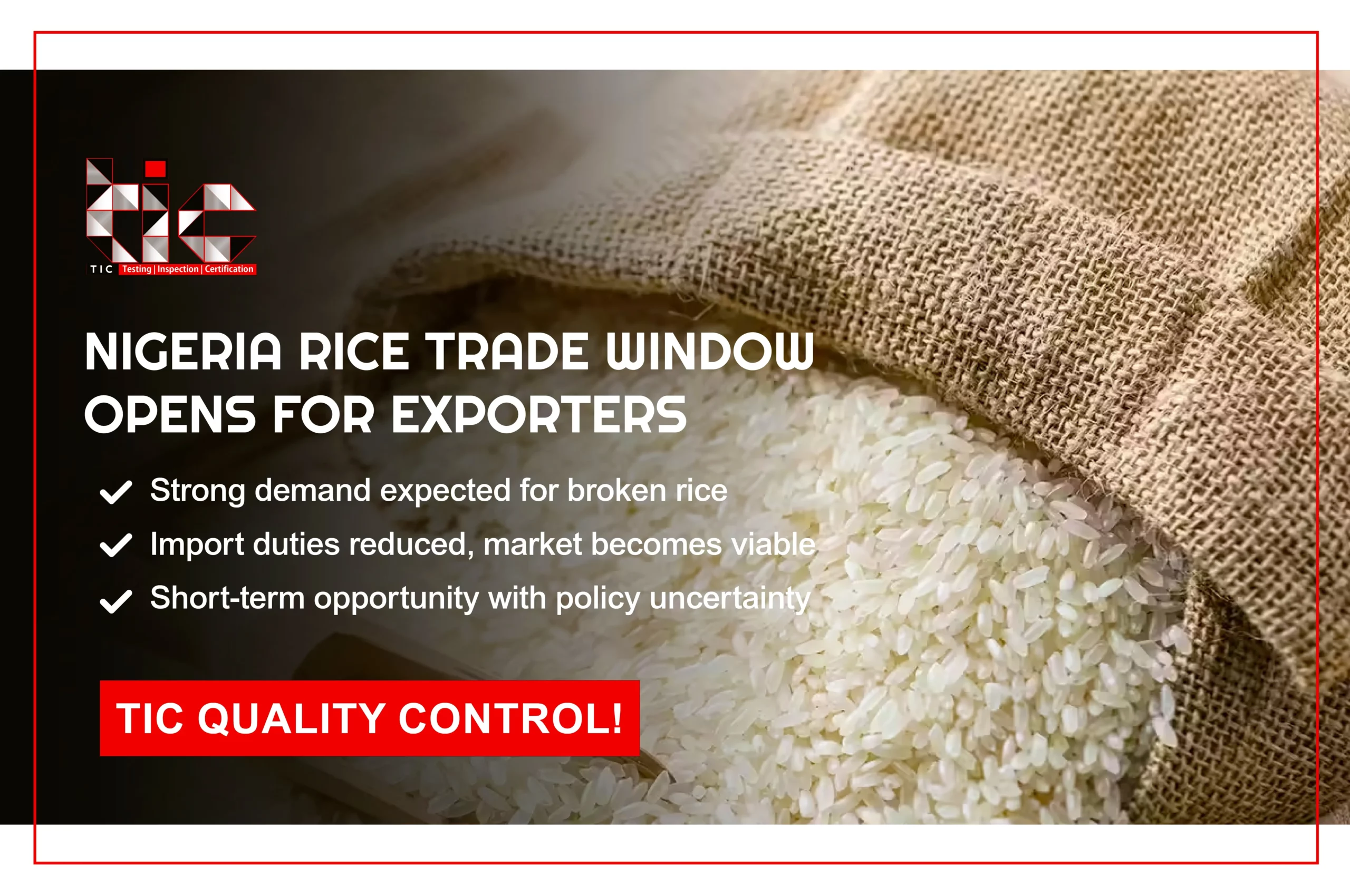
The Nigerian government has reduced import duties on rice significantly. Previously, rice imports faced duties of around 70 percent, making direct imports commercially unviable for many traders. Now, the duty has been reduced to approximately 47.5 percent. Even more notable is the reduction in duties on broken rice, which has dropped to around 30 percent.
This is a major shift. Such reductions directly impact landed cost, allowing importers to compete more effectively in the local market. For exporters, this opens the door to re-enter a market that was previously difficult to access through formal trade channels.
What Triggered This Change
To understand the opportunity, it is important to look at the broader economic context in Nigeria. The country has been facing rising food inflation, which has put pressure on both consumers and policymakers. One of the key contributing factors has been the removal of fuel subsidies, which increased transportation and production costs across the supply chain.
As rice is a staple food in Nigeria, any price increase directly affects millions of households. The government, under pressure to stabilize food prices and ensure availability, has responded by easing import restrictions. This move is aimed at increasing supply in the domestic market and controlling inflation.
Why This Matters for Exporters
From a global trade perspective, Nigeria’s decision is highly significant. It signals a temporary but powerful demand surge in one of Africa’s largest markets. Exporters who were previously hesitant due to high duties may now find viable margins, especially in the broken rice segment where price sensitivity is higher.
In addition, buyers in Nigeria are expected to actively explore new sourcing options to take advantage of the revised duty structure. This creates immediate demand for competitive suppliers who can deliver both quality and price efficiency.
However, this is not just about supply. Timing, compliance, and execution will play a critical role in determining success. The market is opening, but it is not fully liberalized, which means risks still exist.
A Window, Not a Permanent Shift
One of the most important aspects of this opportunity is its temporary nature. Policy changes in Nigeria can be dynamic, and reversals are not uncommon. This means exporters must approach this opportunity with a strategic mindset rather than assuming long-term stability.
Those who act early may benefit from stronger relationships, better pricing, and first-mover advantage. On the other hand, delays could result in missed opportunities or exposure to sudden policy changes.
In the next part, we will explore the real market dynamics on the ground, including buyer behavior, demand trends, and key risks that every exporter must understand before entering this market.
Nigeria Rice Trade Window 2026: Market Dynamics, Demand Trends, and Ground Realities
While the recent reduction in import duties has created a strong entry point into the Nigerian rice market, understanding the on-ground realities is essential before making any trade decisions. The opportunity is real, but so are the complexities. Exporters who combine speed with market awareness will be in the best position to succeed.
Current Market Demand in Nigeria
Nigeria remains one of the largest consumers of rice in Africa, with demand consistently outpacing domestic production. Despite government efforts to boost local farming, supply gaps have persisted, especially in urban centers where consumption levels are high.
With the latest policy shift, buyers are expected to return to the international market with renewed interest. In particular, there is likely to be strong demand for broken rice. This segment caters to price-sensitive consumers and industrial users, making it highly responsive to changes in import duties.
Early signals from trade circles suggest that Nigerian importers are actively evaluating pricing, logistics options, and supplier reliability. The demand is not theoretical. It is already building, and suppliers who are prepared can start engaging immediately.
Buyer Behavior and Expectations
Nigerian buyers are experienced and highly price-conscious. They are quick to respond to favorable policy changes but equally cautious when it comes to execution risks. This means exporters must be ready to offer competitive pricing along with clear, transparent terms.
Speed of response is also critical. In a fast-moving market like this, delayed communication or slow negotiations can result in lost deals. Buyers are likely to work with partners who can provide quick quotations, flexible shipment options, and reliable timelines.
Another important factor is consistency in quality. Nigerian importers have faced challenges in the past with inconsistent shipments, so trust and reliability will play a major role in building long-term relationships.
The Reality of a Semi-Open Market
Despite the positive signals, it is important to recognize that the Nigerian rice market is not fully open. The current policy environment can be described as controlled flexibility rather than complete liberalization.
Import regulations may still involve documentation requirements, compliance checks, and administrative processes that can vary over time. Exporters must stay updated with the latest guidelines and ensure that all shipments meet regulatory standards.
There is also the possibility of sudden policy adjustments. The government’s primary goal is to stabilize domestic prices, and once that objective is achieved, import duties or restrictions could be revised again.
Risks That Cannot Be Ignored
Entering this market without proper safeguards can expose traders to several risks. Policy reversals remain the most significant concern. A sudden increase in duties or a change in import rules could impact profitability or delay shipments.
Currency fluctuations are another factor to consider. Exchange rate volatility can affect both pricing and payment terms, making it important to structure contracts carefully.
Logistics and clearance challenges may also arise, especially for those unfamiliar with Nigerian ports and procedures. Delays at ports, documentation issues, or unexpected charges can impact overall trade efficiency.
The Importance of Strategic Execution
Given these dynamics, exporters should approach Nigeria with a balanced strategy. This includes conducting due diligence on buyers, securing clear contractual terms, and working with experienced logistics partners.
Rather than treating this as a routine export market, it should be seen as a high-potential but time-sensitive opportunity that requires careful planning. Those who understand the ground realities will be able to navigate challenges while maximizing returns.
In the next part, we will focus on how exporters can practically enter this market, including trade routes, pricing strategies, and execution models that can help convert this opportunity into real business.
Nigeria Rice Trade Window 2026: Entry Strategies, Trade Routes, and Execution Planning
With demand building and policy conditions temporarily favorable, the next step for exporters is clear: execution. However, entering the Nigerian market successfully requires more than just identifying an opportunity. It demands a well-planned strategy that covers pricing, logistics, compliance, and risk management.
Choosing the Right Trade Approach
Exporters broadly have two approaches when supplying rice to Nigeria. The first is direct shipment into Nigerian ports under the current duty structure. The second involves routing cargo through neighboring countries, particularly Benin, which has historically been used as an alternative entry point.
With the recent duty reductions, direct exports to Nigeria are becoming more viable than before. This reduces dependency on indirect routes and allows for better transparency in pricing and documentation. However, the indirect route through Benin may still remain relevant in certain cases, depending on cost structures and buyer preferences.
That said, traders must be cautious. Authorities are closely monitoring trade flows, and improper routing or documentation issues can lead to complications. It is essential to fully understand current regulations before choosing the most suitable route.
Pricing Strategy and Market Positioning
Pricing will play a decisive role in capturing this opportunity. Nigerian buyers are highly sensitive to price changes, especially in the broken rice segment. Exporters must calculate landed costs carefully, taking into account duties, freight, insurance, port charges, and local distribution expenses.
A competitive price does not always mean the lowest price. Reliability, consistent quality, and clear contract terms can justify slightly higher pricing if they reduce risk for the buyer. Early movers in this market may also benefit from better margins before competition intensifies.
It is also important to stay flexible. As more suppliers enter the market, price dynamics may shift quickly. Exporters who can adapt their pricing strategies in real time will have a stronger advantage.
Logistics and Supply Chain Planning
Efficient logistics can make or break a deal in this market. Nigerian ports can experience congestion, and clearance timelines may vary. Working with experienced freight forwarders and local agents can help minimize delays and ensure smoother operations.
Shipment planning should include realistic timelines, proper documentation, and contingency measures. Exporters should also consider partial shipments or staggered deliveries to reduce risk exposure, especially in a volatile policy environment.
Another key factor is packaging and quality control. Rice shipments must meet buyer specifications consistently. Any deviation can lead to disputes, delays, or financial losses.
Contract Structuring and Risk Mitigation
Given the fluid policy environment, contracts should be structured with strong safeguards. This includes clear terms on pricing validity, delivery timelines, payment conditions, and responsibilities in case of regulatory changes.
Including clauses that address duty revisions or unforeseen policy changes can help protect both parties. Payment security is equally important, and exporters should prefer structured payment mechanisms that reduce financial risk.
Due diligence on buyers is essential. Working with verified and experienced importers can significantly reduce the chances of disputes or defaults.
Moving from Opportunity to Execution
The Nigerian rice market is not just about identifying demand. It is about converting that demand into successful transactions. Exporters who combine speed with careful planning will be better positioned to navigate uncertainties.
This is a market where preparation meets timing. Acting too slowly may result in missed opportunities, while acting without preparation can lead to avoidable risks.
In the final part, we will summarize the overall opportunity, highlight key takeaways, and provide a clear strategic outlook for exporters looking to capitalize on this evolving trade window.
Nigeria Rice Trade Window 2026: Key Takeaways and Strategic Outlook for Exporters
As the Nigerian government reshapes its import policy to address rising food inflation, the global rice trade has been presented with a rare and time-sensitive opportunity. This is not a routine market shift. It is a strategic window that requires both urgency and discipline from exporters who are looking to expand their footprint in West Africa.
A Clear but Short-Term Opportunity
The reduction in import duties has immediately improved the commercial viability of rice exports to Nigeria. For the first time in years, direct trade into one of Africa’s largest consumption markets is becoming practical under formal channels.
However, it is important to recognize that this is not a permanent policy transformation. The Nigerian government’s primary objective is to stabilize domestic prices and ensure food availability. Once these goals are achieved, there is a strong possibility that duties or restrictions could be revised again.
This makes timing one of the most critical factors. Exporters who move quickly and strategically are more likely to secure profitable deals and establish market presence before conditions change.
First-Mover Advantage in a Competitive Market
Early participation in this trade window offers several advantages. Exporters who enter the market now can build relationships with key importers, understand buyer preferences, and position themselves as reliable suppliers.
In emerging or reopening markets, trust is often as valuable as price. Buyers tend to continue working with partners who demonstrate consistency and professionalism during initial transactions. This creates an opportunity not just for short-term profits, but also for long-term business potential.
At the same time, competition is expected to increase as more exporters recognize the opportunity. This will gradually put pressure on pricing and margins, making early entry even more beneficial.
The Role of TIC in Risk-Controlled Trade Execution
In a dynamic and policy-sensitive market like Nigeria, the role of the TIC (Testing, Inspection, and Certification) industry becomes increasingly important. Ensuring that shipments meet quality standards, contractual specifications, and regulatory requirements is critical for avoiding disputes, delays, or financial losses.
Independent inspection, pre-shipment verification, and quality assurance processes help both exporters and importers build trust and reduce operational risk. In markets where policies can change quickly, having proper inspection and certification support adds an extra layer of security to transactions.
Organizations such as TIC Quality Control, operating within the TIC ecosystem, play a key role in supporting exporters with inspection, compliance, and quality control services aligned with international trade standards.
Balancing Speed with Risk Management
While speed is important, it should not come at the cost of proper risk management. The Nigerian market, in its current state, requires careful execution.
Exporters must stay updated with the latest import regulations and ensure full compliance at every stage of the transaction. Even small documentation errors can lead to delays or financial losses.
Contracts should be structured to account for uncertainties, including possible duty changes or policy adjustments. Clear communication with buyers and logistics partners is essential to avoid misunderstandings and ensure smooth operations.
Financial planning is equally important. Currency fluctuations, payment security, and cost variations must all be considered when finalizing deals.
Final Thoughts
The message is simple: the window is open, but timing is critical.
Nigeria’s decision to reduce rice import duties has created immediate demand and renewed trade potential. For exporters, this is a chance to re-enter a high-volume market under more favorable conditions.
At the same time, the environment remains dynamic. Policies can change, risks remain, and execution challenges must be managed carefully.
Those who combine timely action with informed decision-making, supported by strong compliance and inspection frameworks, will be best positioned to turn this opportunity into measurable business growth.